Bullets
< Return to subforum
Bullets should be considered the key element in aerial combat.
A missile has quite very limited speed. BrahMos, the world's fastest cruise missile, has a top speed of about Mach 3 (though a superior version capable of traveling at Mach 7 is in development). Mach 10 is roughly 7600 MPH.
Meanwhile, in the Navy...
http://www.csmonitor.com/Science/2012/0301/Navy-railgun-fires-40-lb.-bullets-at-Mach-7-video
Bullets are capable of moving at least as fast as a missile. Why? Because bullets are very lightweight compared to a missile. Plus, a bullet doesn't have to carry all of its fuel with it.
Imagine that you have a theoretical aircraft called the T-1. Now, imagine that you have a BrahMos II (the upgraded version of the BrahMos which can travel at Mach 7) flying at the T-1. The T-1 has a railgun or some kind of powerful gun on it (albeit one which fires much lighter projectiles and thus is much smaller than the ones that you see on battleships). It fires its bullet at 4,000 MPH or so towards the incoming missile.
The missile is not programmed to dodge the tiny bullet. The bullet is moving too fast for the missile to properly detect it even if it did. Plus, you must add the speed of the missile and the bullet, because they're moving towards each other.
The end result is that the bullet smashes through the missile.
The only other component necessary for this would be to accurately fire the bullet in the missile's path.
Plus, such an aircraft would still be capable of shooting down enemy aircraft.
So why the heck do armies not do this for air superiority purposes? A single aircraft equipped solely with these anti-missile bullets could annihilate dozens of enemy missiles.
 Dassault Papillon
:
Capital AA exists to shoot down missiles, but it is mostly used in Naval Combat. Air Force officers invented a doctrine known as swarming to counteract this, and I'll get to this later.
Interceptor and Fighter planes both use bullets, although fighters are what are used mostly for prolonged air battles. There are a lot of reasons why they do not attach large miniguns to modern day fighter planes...
- Penetrating the shell of a missile travelling at super high speeds is possible, but hard to do. This was actually already acknowledged, which is why most interceptor planes fire a volley of missiles, and not just one. The same thing goes for Naval Capital AA, and those things fire 3x as fast as anything you could attach to a plane. They will often shoot down one missile, but the rest will make it through and hit the ship.
- Attaching a rotatable 4000 RPM minigun is highly unrealistic. It would slow down the plane considerably. Not to mention it would be incredibly heavy and hard to control in a combat situation.
- The drawbacks of a 4000 RPM minigun diminish the initial purpose of a fighter plane to begin with. Low ammo space, a heavy gun that needs to be manually operated (imagine having to aim and reload a minigun flying through the air in a combat zone), and worst of all, a fighter plane is sent in to fight other fighter planes, and fighter planes don't commonly use missiles.
Does that answer your question?
Blackflag:
I said 4,000 MPH, not RPM. That is, the bullet would travel at 4,000 MPH.
I've heard that even a single piece of straw can, while traveling at ridiculously high velocities, go through a fairly thick wooden board. A bullet could, if it hits with the kind of impact described here, destroy a missile. That's the way I envision it, anyways.
By the way, what did you mean by "fighter planes don't commonly use missiles"? I was under the impression that missiles were how modern fighter jets fought each other, and that dogfighting was extremely rare. Am I wrong about this?
My idea also hinged upon the plane's computers automatically targeting the missile and the pilot simply pulling a trigger.
Dassault Papillon:
If it isn't 4000 RPM it definitely isn't going to blow up a single missile in a volley
There are not automatic heat seeking gunner systems for fighter and interceptor planes. They are manually operated by a gunner. In fact, there isn't even a plane spec that has something as heavy as a minigun attached to it. Is reloading also supposed to be automatic?
Read my other objections too, more specifically the last one.
By the way, what did you mean by "fighter planes don't commonly use missiles"? I was under the impression that missiles were how modern fighter jets fought each other, and that dogfighting was extremely rare. Am I wrong about this?
Fighter planes and interceptors are often confused. even by the military.
There are multi role planes which serve as both fighters and interceptors, such as the Soviet Mig-23 and American F-16 Fighting Falcon (I have expressed my disdain for multi-role aircraft before)
A classical fighter plane is a fuel efficient aircraft that is maneuverable and equipped with a machine gun, and is used in dogfights for gaining air superiority
Interceptors are the planes that often have missiles on them. They are fast attack aircraft that "intercept" enemy forward aircraft in controlled territory. Sending interceptors against fighters isn't practical, because it requires those planes to land and rearm before they can go back into combat again.
I could just give a quick rundown on aircraft types to avoid future confusion
- Multi-Role Aircraft are hybrids of fighters/interceptors/bombers, but almost always perform with less efficiency, and usually cost less
- Fighters are designed to take down other enemy aircraft in prolonged dogfights
- Interceptors are designed to quickly carry out strikes against forward enemy aircraft, as opposed to dogfights in which case they are usually insuperior to a pure fighter aircraft
- Interdictors are designed to operate far behind enemy lines to slow down troop movements and attack logistical checkpoints, such as roads or outposts
- Trainer aircraft are used specifically for military flight training that are not specialized. Good trainer aircraft designs are highly profitable on the military market
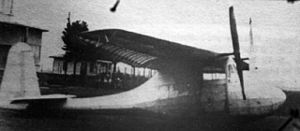
- Seaplanes/Floatplanes are aircraft designed mostly for naval recon with amphibious capabilities, such as the ability to float on water, and retake in the air when ready
- Flying Boats are seaplane variants which have a full sized hull, much like a small frigate
- Dive bombers are a rarity now adays, but in my opinion they are still effective with improved designs and skilled pilots, because they render the use of Capital AA on airborne missiles obsolete. A dive bomber, "Dives" at a ship and launches a torpedo, which will accelerate through the water and explode under the ships hull
- Reconnaissance aircraft come in two variants. Super stealthy or super fast. Usually they are super fast, and flyby enemy installations taking quick pictures before AA or interceptors can respond
- Assault Aircraft are designed to provide super fast and accurate close air support, capable of destroying one or at most two ground targets at high speeds
- Cooperation Aircraft (obsolete), which were assigned to fly low with advancing infantry. Concept still interests me, which is why I bring it up
- Submarine bombers (obsolete), as the name suggests, flew over water with high fuel efficiency, capable of dropping bombs which could splice easily through water
- Transport Aircraft are designed to carry large numbers of troops between airfields (helicopters are used on the front lines)
- Strategic Bombers are capable of launching attacks from long ranges. I like to think of them as artillery aircraft
- Tactical Bombers are designed to fight in combined operation missions on the front lines
I think that's all of them. There might be a couple more experimental types, but the only ones I know of were Dive-Torpedo Bombers, Interdictors, Cooperation Aircraft, and Submarine Bombers.
As a bonus, here are some experimental aircraft I discovered just now
Gliding Fighter Aircraft
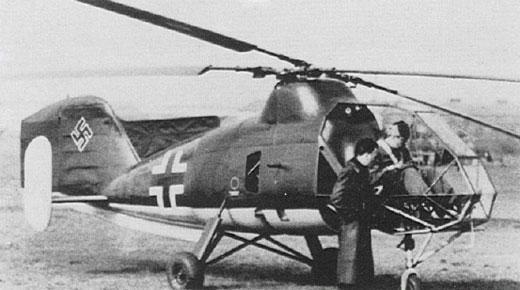
Flettner Aircraft
Human Powered Aircraft
Vertical Takeoff Amphibious Aircraft
Nuclear Powered Bomber (GOD!)
Parasite Fighters
Solar Powered Aircraft
First Modern Helicopter (Nazi Germany)
America's First Airforce
Read about Thaddeus S.C Lowe a long time ago. Super interesting guy whose innovations and accomplishments during the Civil War went largely unnoticed.
Thaddeus Lowe and his adventures resulted in the first doctrines of aerial reconnaissance, forward artillery observervation, and anti-air